 NC Radio
Friday
NC Documentary of the Day
00:00Friday
00:00Friday
[...]
Learn more
01:00Friday
[...]
Learn more
02:00Friday
In the beginning was the word. And the word was A-wop-bop-a-loo-mop-a-lop-bam-boom! When Rock & Roll exploded on the world in the mid-fifties with the successive thunderclaps of Bill Haley, Elvis Presley and Little Richard, it all seemed to come from nowhere. Rock & Roll started, like the universe itself, with a big bang – or perhaps a rapid succession of big bangs, followed by many smaller ones. Or so it seemed.
Learn more
03:00Friday
The Sixties started without a bang. If rock fans expected the new decade to bring fresh excitement, they were in for a big disappointment because we were waist-deep in the soggy middle ground between Rock & Roll and The Beatles, who at this point were about to visit Hamburg for the first time, having just completed a lacklustre tour of Scotland backing Johnny Gentle. In the company of Vince Eager, Dickie Pride, Duffy Power and his biggest acts Tommy Steele and Marty Wilde, Johnny Gentle was a transitory inmate of Larry Parnes‘ “Stable of Stars” – all of whose names were said to have been selected as an indication of their sexual characteristics! Gentle was destined to remain in obscurity.
Learn moreClassic Comedy
04:00Friday
04:00Friday
[...]
Learn more
05:00Friday
06:00Friday
09:00Friday
Classic Ozploitation and other overlooked Australian cult films from the '70s, '80s and beyond.
Learn more
10:00Friday
The Year Was . . .
11:00Friday
11:00Friday
[...]
Learn more
12:00Friday
In 1977, merely suggesting that the Queen was a moron (or a potential H Bomb) would get you banned from the charts. By 1999, The Sex Pistols could have performed a duet with Eminem, three strippers and a donkey, and rolled Her Majesty around Trafalgar Square in a barrel, and nobody would have given a damn. Times certainly changed quickly.
Learn more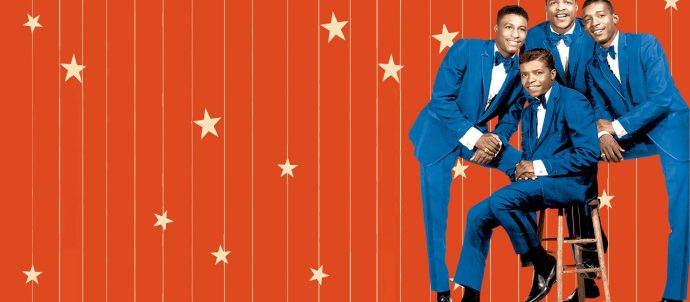
13:00Friday
1955 saw the rise to prominence of several black vocal groups in the USA. Amongst them were The Orioles (their 1948 hit It’s Too Soon To Know is often cited as the first real doo-wop record), The Crows, The Clovers, The Penguins, The Harptones, The Chords (“Sh-boom, life is but a dream…”), The Spaniels, The Cadillacs, The Five Royales, The Moonglows and many others. Most of these groups relied on a single lead voice with three or four harmony singers providing occasional emphasis and background ‘oohs’ and ‘aahs’, which led to these groups being termed ‘doo wop’ groups (“doo-wop” was a favourite background chant in many of these songs). All of these groups saw varying degrees of chart activity, but their success was fleeting compared to the masters of the genre – The Drifters from New York and The Platters from Los Angeles.
Learn more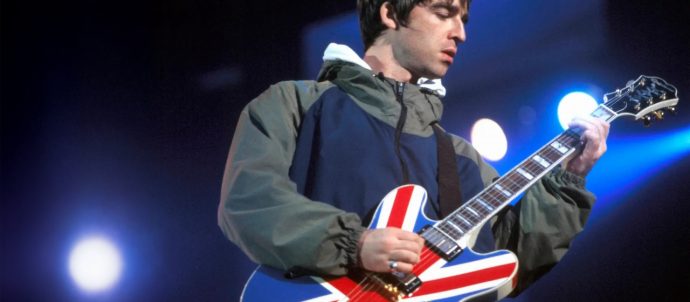
14:00Friday
The mid-90s was a golden era for British music, with several fine bands all coming good at the same time. There was, though, little camaraderie among the practitioners of what came to be called ‘Britpop’ – as evidenced by the 1995 chart war between the top two bands of the genre, the arty pop-oriented middle-class Londoners Blur, and the proletarian Northern rockers Oasis.
Learn more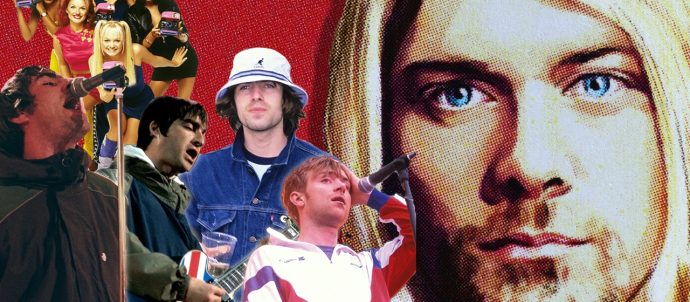
15:00Friday
In England, Oasis and the rest of the Britpop lot left nearly as big a mark as Nirvana and the other Seattleites in the US. Hip-hop took over the world and seemed to change shape every few months. Whether the ‘90s was the greatest decade for music is mostly a generational debate, but as you’ll hear, one thing’s for sure: it was never boring.
Learn more16:00Friday
[...]
Learn more
17:00Friday
19:00Friday
20:00Friday
Casio keyboards, hairdresser bands, New Wave, New Romantics and New Order. Band Aid, Live Aid, Farm Aid and Hearing Aid: In the eighties, when Thatcher was busy selling England by the pound and caring more about some sheep in the southern Atlantic than ‘her’ people, the youthful reaction was Blitz, Boy George and Marilyn.
Learn more
21:00Friday
[...]
Learn more
22:00Friday
[...]
Learn moreTo cut a long story short
23:00Friday
23:00Friday
The “New Romantic” movement was a new and distinctive music and fashion genre that sprang up in Britain in the early 80s as a reaction to the anti-fashion of punk. After all, anyone could slap on a T-shirt, write “Destroy” across the front and rip their jeans with a razor. But to look like a New Romantic, you had to really try hard - and spend a lot of time with a hairdresser (most of whom were New Romantics themselves anyway).
Learn more